

Spinal Decompression Therapy
Advanced, Non-Invasive Relief for Herniated Discs, Sciatica,
and Nerve Compression
Gentle, Targeted Relief for
Discs and Nerves
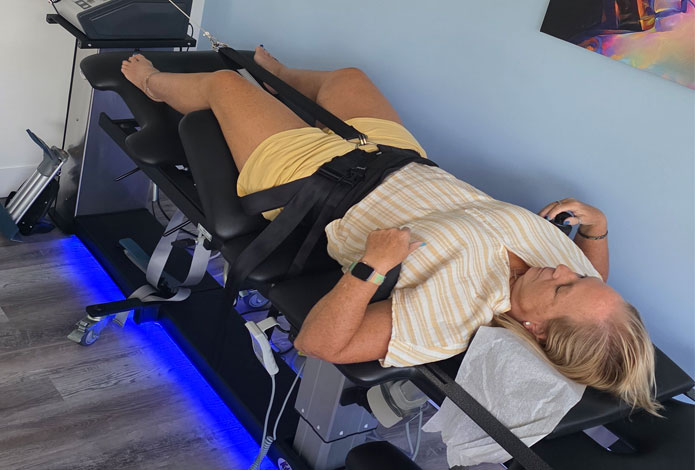
Spinal Decompression Therapy is a non-invasive treatment designed to gently stretch and decompress the spine. Using a specialized computerized table, the therapy reduces pressure on spinal discs and nerves, helping the body rehydrate, heal, and restore proper function.
This technology offers an effective alternative to injections or surgery for patients dealing with chronic back or neck pain.
What Is Spinal
Decompression Therapy?
Spinal decompression uses precise, controlled traction delivered through an advanced motorized table. The system gently releases and retracts the spine in cycles, creating negative pressure inside the discs.
This reduction in pressure allows:
Bulging or herniated discs to retract
Spinal discs to receive increased hydration and nutrient flow
Pinched nerves to decompress naturally
The result is improved mobility, reduced pain, and a healthier spinal environment that supports long-term recovery.
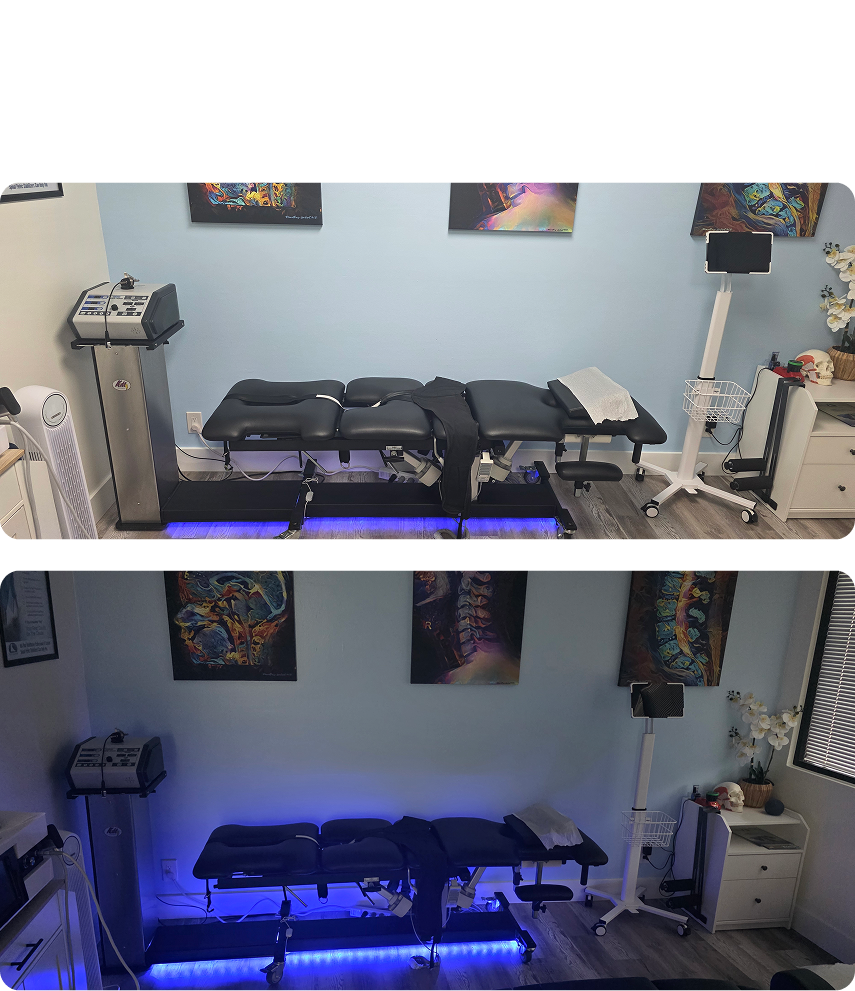
Meet the KDT Neural Flex
Spinal Decompression Table
Align Chiropractic Spine and Wellness most advanced spinal decompression technology is designed to deliver targeted relief for the neck and lower back. It keeps you comfortable throughout your treatment.
Why the Neural Flex stands out:
Neck & Low Back Decompression: Precisely targets the cervical or lumbar spine.
Comfort in Virtually Any Position: Flexible positioning helps create a more comfortable, personalized experience.
Designed for Complex Conditions: Can accommodate patients with advanced conditions such as spinal stenosis.
Pregnancy-Friendly Positioning: Its versatility allows treatment positioning to be adapted for pregnant patients when clinically appropriate.
Advanced Technology, Personalized Care: A sophisticated table that gives your treatment more flexibility and comfort.
Upgrade Your
Decompression Experience
More comfort. More positioning options. More possibilities for care.
Ask us how the KDT Neural Flex can be incorporated into your personalized treatment plan.
Why We Use Spinal
Decompression
Clinically, decompression therapy is used to:
- Reduce pressure on spinal discs
- Relieve nerve irritation or compression
- Improve disc hydration and nutrient exchange
- Enhance joint mobility and flexibility
- Support long-lasting healing in damaged tissues
- Provide relief when other treatments have not been successful
It is especially valuable for chronic disc-related pain that has not responded well to traditional approaches.
Conditions Addressed by
Spinal Decompression
This therapy is widely used for both acute and
chronic spine-related conditions
Disc Disorders
- Herniated or bulging discs
- Degenerative disc disease
- Disc protrusions
- Facet joint syndrome
Nerve-Related Pain
- Sciatica or leg pain from lumbar nerve compression
- Cervical radiculopathy (arm pain or numbness)
- Pinched nerves
Chronic Spine Conditions
- Spinal stenosis
- Chronic lower back pain
- Neck pain related to disc or nerve irritation
- Postural compression injuries
Mobility & Alignment Issues
- Limited spinal flexibility
- Compression caused by repetitive stress
- Poor mobility affecting chiropractic adjustments
Dr. Nick Libian
DC, MS | Corrective Chiropractic
Why Spinal Decompression
Matters in Chiropractic Care
Chiropractic care restores alignment and improves overall spinal function. Spinal decompression speeds up this process by addressing the underlying disc and nerve pressure that often drives chronic pain.
This therapy benefits chiropractic patients by:
- Creating space and mobility for more effective adjustments
- Reducing disc pressure, helping corrections hold longer
- Improving nerve communication to the muscles and tissues
- Supporting healing in stubborn, chronic problem areas
- Driving long-term structural changes rather than temporary relief
When combined with chiropractic adjustments, decompression therapy forms a practical, evidence-based approach to resolving back and neck pain at its source.

 Address:
 Phone:
 Email:
 Hours: Mon–Fri 7:15 AM–12:00 PM & 2:00 PM–6:00 PM